
ENVIRONMENTAL GENOMICS FOR BIODIVERSITY

At MetaGen, we turn genetic data into insights into biodiversity.

We use molecular tools to detect species, characterize communities and generate information that supports research, environmental monitoring, environmental licensing and decisions about biodiversity.

Tell us what your project aims to achieve.
We will help define the approach.

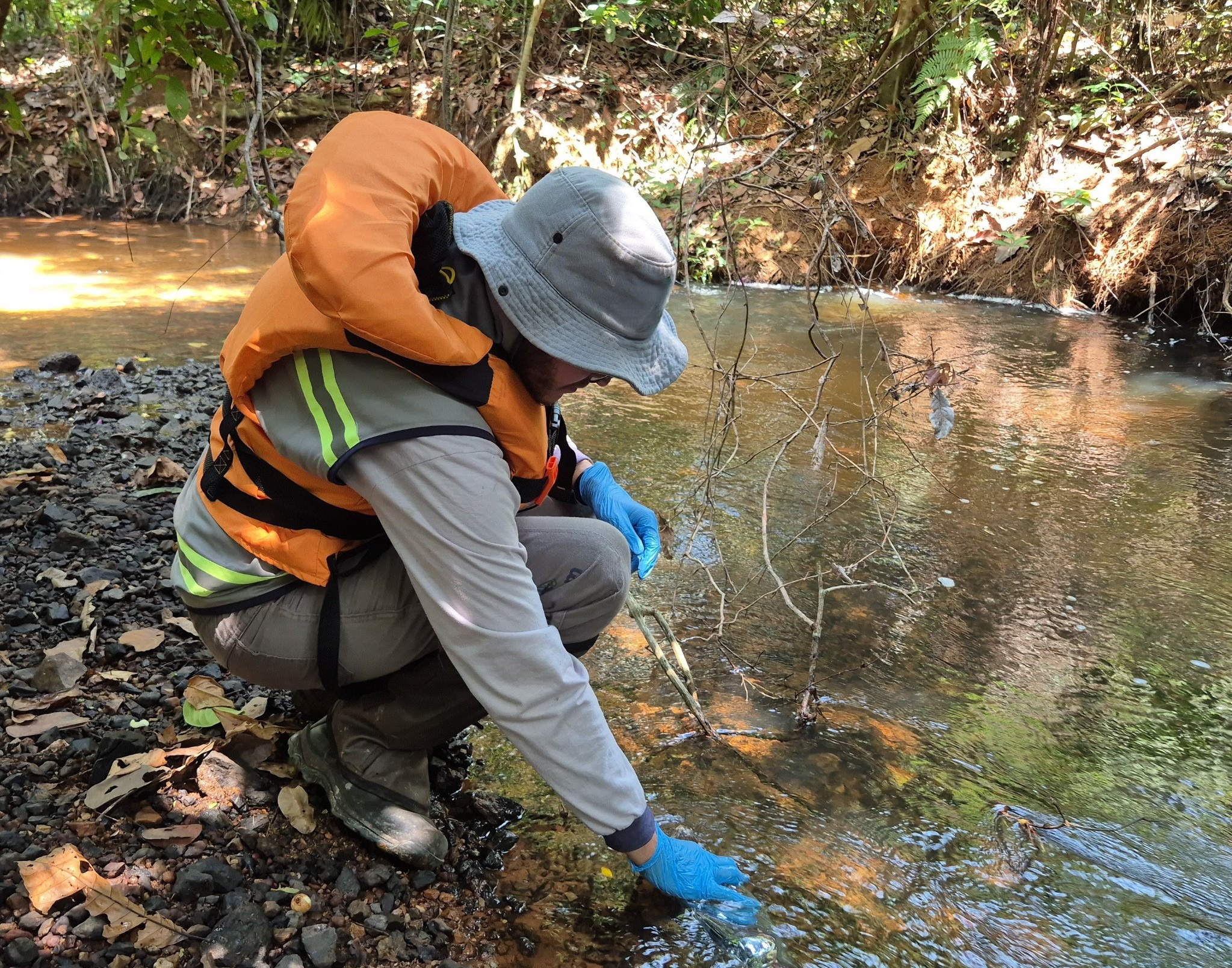
A person wearing gloves and a vest collects a water sample from a stream.
Team of MSc and PhD professionalsGenetics, zoology and ecologyBelo Horizonte, Brazil
01 / APPLICATION CONTEXTS

Your environmental challenge
guides our analysis.

Molecular approaches to different questions about biodiversity.

01

Mining

Biodiversity analyses for environmental studies, monitoring and conservation actions.

How we can help

How can biodiversity be monitored within a development’s area of influence?

Depending on the study design, eDNA and metabarcoding can support monitoring; qPCR can investigate defined targets; and population genetics and genomics can address questions about connectivity.

Explore this context ↗

02

Environmental consulting firms

Molecular tools integrated into the planning and delivery of your studies.

How we can help

How can surveys be complemented to expand the information available?

We align the question and sampling plan to assess approaches such as eDNA, DNA barcoding or qPCR, with interpretation integrated into the consultancy’s study.

Explore this context ↗
03

Energy and infrastructure

Information for environmental studies and programs at different project stages.

How we can help

How can biodiversity be investigated in environments subject to different pressures?

The question guides the combination of eDNA and metabarcoding, targeted qPCR investigations or population studies, where appropriate to the study design.

Explore this context ↗
04

Conservation

Genetics applied to conservation, restoration and biodiversity monitoring.

How we can help

How can evidence about species and communities guide action?

Detection using eDNA or qPCR, identification through DNA barcoding, and studies of population diversity and connectivity provide distinct, complementary evidence.

Explore this context ↗
05

Research

From the scientific question to molecular analysis and bioinformatic processing of results.

How we can help

Which genetic approach is suitable for answering your question?

We discuss the suitability of qPCR, barcoding, metabarcoding or population genetics and genomics, connecting study design, analysis and bioinformatics.

Explore this context ↗
02 / ANOTHER SCALE OF OBSERVATION

From sample
to information.

A sample of water, soil, sediment or tissue carries genetic information. From sampling to bioinformatics, we turn that information into answers about biodiversity.

  1. 01

    Question

    What you need to know, and with what level of precision.

  2. 02

    Sample

    Water, soil, sediment or tissue, collected according to the study design.

  3. 03

    Extraction

    DNA is isolated from the sample in a controlled environment.

  4. 04

    Molecular analysis

    Metabarcoding, qPCR, barcoding or population markers, depending on the question.

  5. 05

    Data

    Sequencing and bioinformatic processing.

  6. 06

    Information

    Interpreted results, with methods and limitations made explicit.

The workflow is adapted to the approach: not every analysis involves sequencing.

The question guides the method. Interpretation takes the limitations of the analysis into account.

Explore the analytical workflow
03 / MOLECULAR SOLUTIONS

Rigor in every analysis.
Clarity in every deliverable.

We define the approach according to the objective, sample type and organisms of interest.

What is your question?

Select a question to explore the analysis and its deliverables. These are examples of possible applications; the scope is defined for each study.

01 / Environmental DNA (eDNA) and metabarcodingWhich fish species occur in each stretch of the river, including threatened and invasive non-native species?
Analysis
Environmental DNA (eDNA) and metabarcoding
Answer / deliverable
A list of species detected at each sampling point and in each survey campaign, observed richness, comparison with conventional surveys and a map of detections.

Possible applications

  • Monitoring fish communities in reservoirs and river stretches for environmental licensing.
  • Surveying mammals and amphibians using water, soil and sediment.
  • Tracking areas undergoing restoration over time.

Taxonomic groups, sample types and deliverables depend on the design, markers and available references. Failure to detect DNA does not establish that a species is absent.

Explore the approach Understand metabarcoding
02 / qPCR — targeted species detectionHas invasive species X reached this reservoir?

Does threatened species Y still persist in this river stretch after construction?

Analysis
qPCR — targeted species detection
Answer / deliverable
Detection or non-detection for each sample, with a detection limit and controls, and a time series when sampling campaigns are repeated.

Possible applications

  • Early surveillance of invasive species in water bodies.
  • Investigating the persistence of target species in conservation plans.
  • Rapid targeted screening before a broader metabarcoding analysis.

Presence/absence refers to detection of the target under the assay conditions. Non-detection does not mean absolute absence; assay availability and validation must be assessed.

Explore the approach
03 / DNA barcodingWhich species does this egg, larva, tissue fragment or carcass belong to?

Is the morphological identification correct?

Analysis
DNA barcoding
Answer / deliverable
Molecular identification of each specimen, including its sequence, similarity to references and confidence level.

Possible applications

  • Identifying ichthyoplankton, including eggs and larvae, in studies of fish reproduction.
  • Confirming specimen identity in collections and field samples.
  • Verifying species in seized or traded biological material.

The level of identification possible depends on sample quality, the marker and available references.

Explore the approach
04 / Population genetics and genomicsDo populations upstream and downstream of the dam still exchange individuals?

What is the genetic diversity of the source population for a reintroduction?

Analysis
Population genetics and genomics
Answer / deliverable
Diversity indices, population structure, connectivity estimates and management recommendations, using microsatellite markers, SNPs or sequencing as appropriate to the study.

Possible applications

  • Assessing fragmentation associated with dams.
  • Selecting breeding individuals or source populations for breeding and release programs.
  • Studying species with restricted distributions, such as annual killifish in temporary pools.

Genetic connectivity does not directly measure the current movement of individuals. Inferences depend on the timescale, sampling and markers; an association alone does not demonstrate causation.

Explore the approach
05 / BioinformaticsI have raw sequencing data and need an auditable species list and figures for a report.
Analysis
Bioinformatics
Answer / deliverable
Processing with documented parameters, curated reference databases, contamination control and results ready for interpretation.

Possible applications

  • Reprocessing third-party data.
  • Standardizing results across sampling campaigns.
  • Integrating molecular data with the project’s ecological data.

Scope, curation and controls depend on the available data and metadata. Taxonomic resolution depends on the quality of sequences and references.

Explore the approach
04 / ABOUT METAGEN

Applied science.
Biodiversity in focus.

We are a Brazilian company specializing in environmental genomics for biodiversity, working with environmental DNA (eDNA), qPCR, DNA barcoding, population genetics and genomics, and bioinformatics.

Our team brings together expertise in genetics, zoology and ecology to connect project questions with the possibilities of molecular analysis.

Meet MetaGen and the team ↗
The MetaGen team: Izabela on the left, Daniel in the center and Vitor on the right.
MetaGen team
05 / LET’S TALK

What question
does your project need to answer?

Tell us what you need to investigate. MetaGen will help define the approach and scope of the analysis.

contato@metagen.com.br ↗+55 (31) 99550-0996+55 (31) 97175-2141+55 (31) 99212-8041

Before you start

When should qPCR be used instead of metabarcoding?

qPCR is a targeted approach used when there is a defined target. Metabarcoding allows multiple taxa to be assessed from a sample. The choice depends on the project question and analytical scope.

Do I need to know which analysis to request?

No. Tell us about the study objective, environment and organisms of interest. An initial discussion helps define the scope and the most suitable molecular approach.

Does eDNA replace conventional surveys?

The choice depends on the question and study design. eDNA can complement other approaches. Its results must be interpreted in light of the sampling, markers used and reference databases.

What information is needed to request a proposal?

Describe the project context and what you need to investigate. If known, include the type and number of samples, groups of interest and desired timeframe.

Tell us about your project so we can discuss the approach.

By submitting your request, you acknowledge the Privacy Policy. Your data will be used to respond to your inquiry and assess your needs.