
A biological mixture. Different signals of biodiversity.
Metabarcoding uses DNA regions to investigate groups of organisms in a sample. The choice of approach depends on the available material, groups of interest and study question.
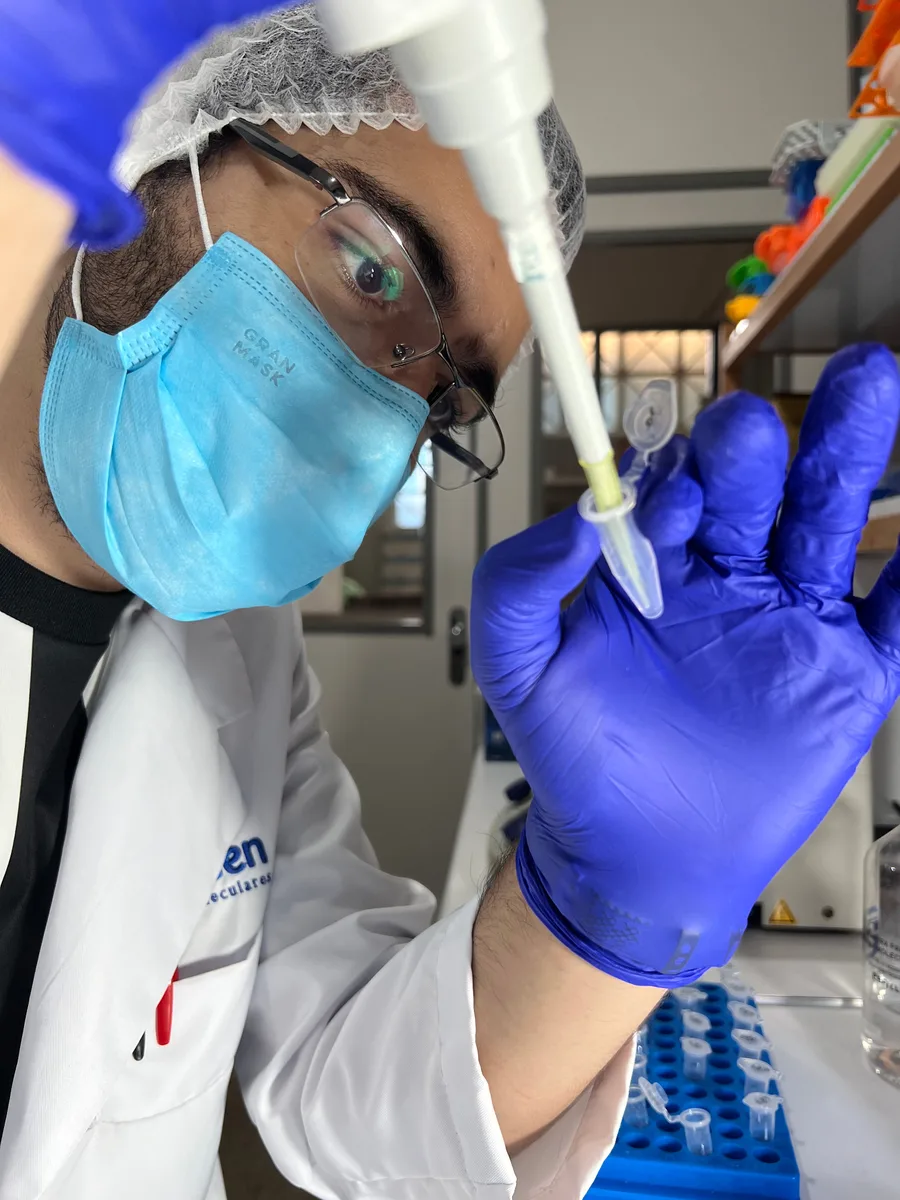
An analytical approach.
Metabarcoding combines the analysis of DNA marker regions with sequencing of biological mixtures. The resulting sequences are evaluated using bioinformatics methods and compared with references to investigate the organisms detected.
Environmental DNA (eDNA) describes the origin of the material; metabarcoding describes a way of analyzing it. The approach can be applied to environmental samples and other materials containing DNA from different organisms, depending on the feasibility of the protocol.
Explore the environmental DNA approach ↗The marker defines part of the scope.
Different DNA regions offer different resolutions. Marker selection should consider the groups the study aims to investigate and the ability to distinguish among them.
No marker guarantees detection of all organisms. Amplification may favor some groups and fail to recover others; expanding the combination of markers does not eliminate all limitations either.
- Define the groups of interest before choosing markers.
- Assess the quality and preservation of the material.
- Plan controls and analytical criteria appropriate to the question.
A sequence needs a reference.
Taxonomic assignment depends on the representation of organisms in the reference databases consulted, the quality of the references and the discriminatory power of the marker. Some sequences may be assigned to a genus or family without supporting species-level identification.
Processing must make quality and assignment criteria explicit. A list of names without this context does not, by itself, convey the strength of the evidence.
Understand the role of bioinformatics ↗Investigating composition and differences.
The approach can support questions about the composition of organisms detected in samples and comparisons between locations or sampling campaigns. These comparisons require compatible design and effort.
In research and environmental studies, metabarcoding can complement other sources of information. Its application must be assessed for each material and objective, without promising universal detection.
Explore application contexts ↗Detection is not a complete inventory.
Failure to detect a sequence does not prove that the organism is absent. Contamination, degradation, inhibition and analytical bias must be considered.
The number of sequencing reads does not directly correspond to the number of individuals. In environmental samples, DNA transport and persistence also limit inferences about occurrence at the sampling location and time.
Additional considerations for environmental DNA ↗What biological mixture are you investigating, and what question do you need to answer?
Tell us about the project context, environment and the question you need to answer. An initial conversation helps define the approach and scope.